
Quenching process and process of automatic quenching oil tank
Abstract
automatic quenching oil tank quenching process is a metal heat treatment process in which the metal
- Promulgator: ChengChi
- Send date:2025-05-14
- Tags: heat treatment,quenching medium,temperature,cooling,steel,quenching oil tank,quenching tank,automatic quenching,quenching,workpiece,
Keywords: automatic quenching, quenching oil tank, quenching tank, heat treatment, workpiece, temperature, quenching medium, cooling, steel, quenching,
Automatic Oil Tank Quenching and Flow
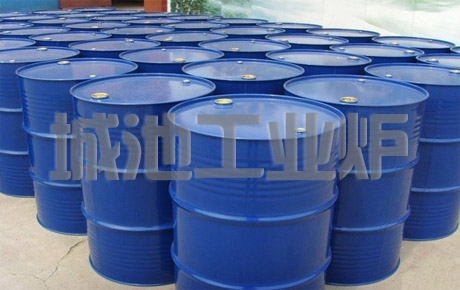
automatic quenching oil tank quenching process is a metal heat treatment process in which the metal workpiece is heated to a 1 appropriate temperature and kept for a period of time, and then immersed in the quenching medium for rapid cooling. Commonly used quenching media are brine, water, mineral oil, air and so on. Quenching can improve the hardness and wear resistance of metal workpieces, so it is widely used in various works, molds, measuring tools and parts requiring surface wear resistance (such as gears, rollers, carburizing parts, etc.). Through quenching and tempering at different temperatures, the strength, toughness and fatigue strength of the metal can be greatly improved, and the coordination between these properties (comprehensive mechanical properties) can be obtained to meet different requirements. In addition, quenching can also make some special properties of steel to obtain certain physical and chemical properties, such as quenching to enhance the ferromagnetism of permanent magnet steel, stainless steel to improve its corrosion resistance. The quenching process is mainly used for steel parts. When the commonly used steel is heated above the critical temperature, all or most of the original tissue at room temperature will be transformed into austenite. The steel is then immersed in water or oil for rapid cooling, and the austenite is transformed into martensite. Compared with other structures in steel, martensite has the highest hardness. The purpose of steel quenching is to transform all or most of its organization into martensite, obtain high hardness, and then temper at an appropriate temperature to make the workpiece have the expected performance. The rapid cooling during quenching will produce internal stress in the workpiece, and when it is large to a certain extent, the workpiece will be distorted or even cracked. A suitable cooling method must be selected for this purpose. According to the cooling method, the quenching process is divided into single-liquid quenching, double-medium quenching, martensitic quenching and bainite isothermal quenching. automatic quenching oil tank important factor for quenching effect, hardness requirements and detection methods for quenching workpieces in fast automatic quenching oil tank:
The hardness of the quenched workpiece in the automatic quenching oil tank affects the quenching effect. Fast automatic quenching oil tank quenching workpiece generally using Rockwell hardness tester, test HRC hardness. The hardened thin hard steel plate and the surface hardened workpiece can be tested for the hardness of the HRA. For quenched steel plates with a thickness of less than 0.8mm, shallow surface quenched workpieces and quenched steel bars with a diameter of less than 5mm, the surface Rockwell hardness tester can be used to test the HRN hardness.
More Quenching process and process of automatic quenching oil tank: www.quenchtank.com/view-132.html
Relevant Quenching process and process of automatic quenching oil tank
-

Rapid automatic quenching oil ...
-

quenching salt bath
-

Thermocouple for Temperature C...
-

Quenching tank energy manageme...
-

automatic feeding machine
-
Quenching process and process ...
-

What is an automatic control s...
-
What is a quenching tank?
-

Brief Analysis of Common Regul...
-

Chengchi industrial furnace ob...
-
Explain in detail the six majo...
-

1 Automatic Control System of ...
-

Bainite Isothermal Quenching E...
-
Application of Variable Freque...
-
Quenching medium Cooling perfo...
-

Quenching Process and Process ...